
The Biological Prayer
Before language, there was frequency

Everything that happens at this farm begins with consent. That’s true for the horses and equally true for the humans.
Most people step out of their cars wishing someone would tell them what to do. They walk into the barn infused with the urgency of travel, even if their commute was short. They are eager, slightly anxious, and their eyes move around, looking for an instruction, a schedule, a clear, correct answer.
These humans want to be useful and do it right. They want, more than anything, to skip the part where they have to make a decision.
So I offer a list of options, and I watch what happens next.
Options disappoint them. Their shoulders stay tight, and their eyes keep looking for a clear outline. There’s a long beat of silence while the person stands in the middle of the barn aisle with the hay dust and the sound of a horse shifting its weight — a blank slate. The human stands there and tries to locate somewhere, anywhere, inside themselves, a preference or a want, some signal from their interior that tells them a direction to go.
I watch as they can’t find it, or when they do, they immediately distrust it. Or they look at me and wait for my face to tell them which answer is correct.
Choosing, it turns out, is often the hardest exercise we do here. Choosing is harder than the physical work, and harder than learning to squeeze your foot against a horse’s side with the intention to ask them to move forward. Horses are patient with human indecision. This isn’t their first rodeo. They’ve seen all this before, how a human will stand beside them with a hand against their neck, waiting through the awkward silence for an answer to fall from the sky. Humans want their bodies to move while their minds feel certain. Humans always ask: Am I doing this wrong?
What I’ve learned from watching humans be afraid of doing nothing is that making a choice is almost never the problem, though it seems that way on the surface. The hard part is that humans have been so far removed from their own wanting for so long that the signal is faint, a frequency they were born knowing how to receive and slowly, as they grew, forgot how to recognize.
My work begins in their silence and confusion, because, slowly, if we stand in the awkwardness of seeking long enough, a person will begin to lean into what they actually want to discover.
My writing this week is about finding that frequency. Let’s explore where it comes from, why we lose it, and what the animal world has been doing forever, while we’ve been standing in the barn aisle, wondering which way to go.
THE UNINTERRUPTED SIGNAL
Right now, as you read this, humpback whales in the North Atlantic are singing to each other across hundreds of miles of open ocean.1
Their sounds are ever-evolving compositions that change as they go. Their language spreads between populations like a song moving through human culture, from whale to whale and ocean to ocean, a living, growing transmission. The songs travel at long, slow frequencies that go far underwater. The whale’s body sings out into the deep, spreading information and memory to far-reaching recipients.
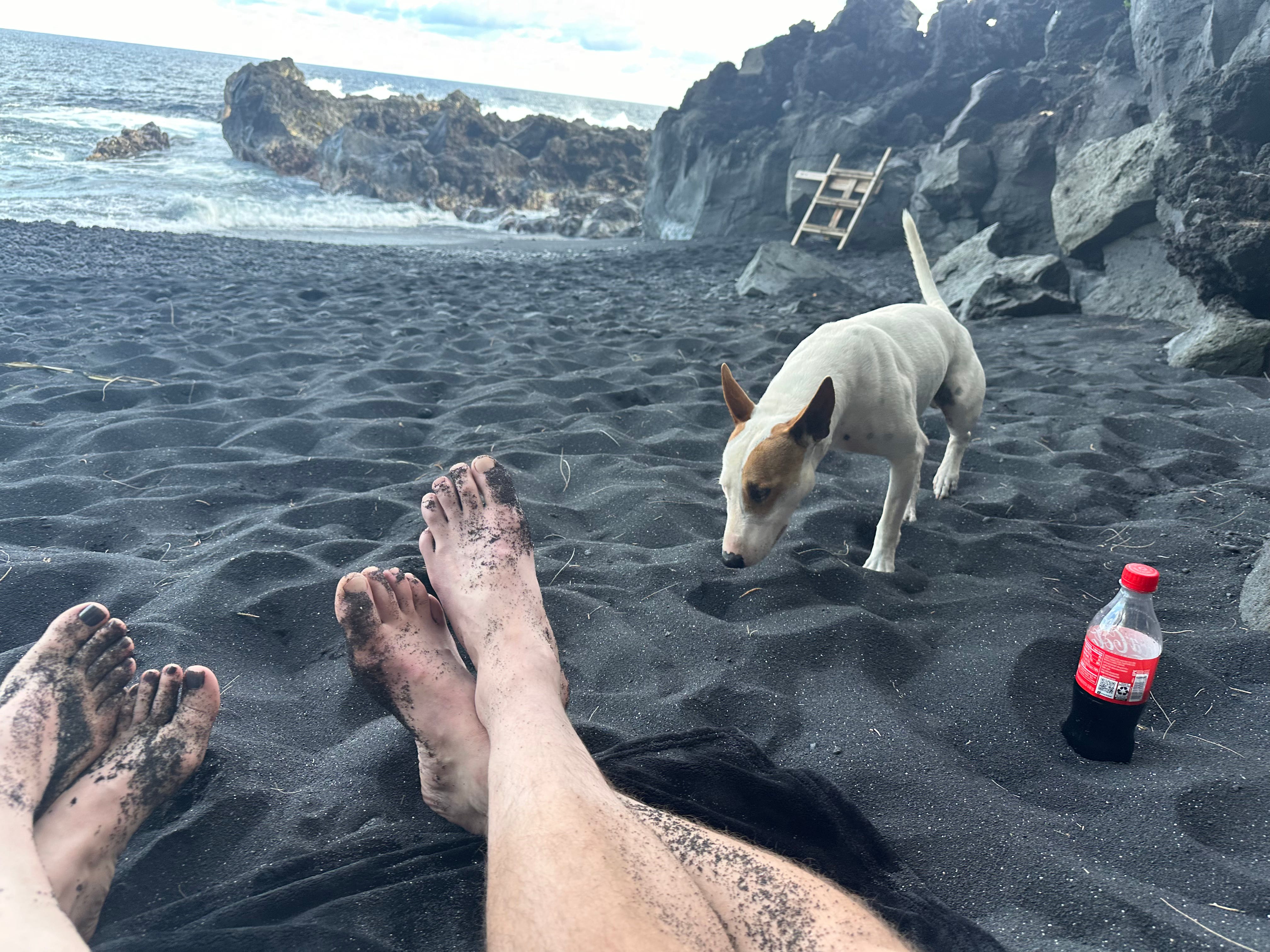
When Christopher and I were in Hawaii, we sat on a black lava beach and watched a woman swim beside a rocky outcropping in the churning waves. I kneeled in the surf to get a closer look, and the power of the waves toppled me. As I righted myself, the swimmer walked toward me, out of the ocean. She was crying. She grabbed my hands and was ecstatic as she tried to explain the song of the whales she’d heard when her head was beneath the surface. As if on cue, the whales breached nearby.
I didn’t hear the sound with my ears, but in that moment, something inside me shifted. I heard the sound with my body, and my body remembered something old and forgotten. I’ll never be the same again, thank goodness.
On the land, elephants also communicate with sound. When they stand over their dead — and they do stand over their dead, sometimes for days, returning to the same bones years later — they communicate through infrasound, frequencies below the threshold of human hearing, frequencies the earth carries better than air. The grief travels through the ground itself. The sound moves through the herd, information passing between them at a register we don’t have ears to hear. But our bodies know and feel the recognition.2
It makes sense to me that grief chooses the ground as its medium. The elephants deep mourning moves through the body of the earth, from one set of wide, big feet to another.
Sperm whales have a clicking language so nuanced that MIT researchers identified what amounts to a phonetic alphabet — a rhythm, tempo, and ornamentation. Embedded within it, they found consistent individual signatures that could allow each whale to be recognized by name.3
Wolves howl in order to locate each other across distance, across valleys and forests, a sound shaped by the landscape and carried by it. The wolves say to each other: I am here. Where are you? We are still we.4
We might not hear these sounds with our ears, but we feel them in our bodies. Horses do this too.
Embedded in the heel bulbs and the frog of each horse’s hoof are sensory receptors called Pacinian corpuscles, sensitive to low-frequency vibrations in the range of 20 to 700 Hz, tuned specifically to receive what the earth is saying. Researchers have noted that horses appear to detect approaching animals, flooding, and even underground seismic tremors days before an earthquake registers on human instruments.5
The hoof is a neurosensory organ, and a barefoot horse moving across varied terrain is in constant conversation with the ground beneath it, receiving information at a frequency most of us have completely forgotten or were ever capable of sensing.
I think about all the times I tried to force a horse that was firmly planted, refusing to move because of something it sensed. I respond very differently now to a horse scanning the environment than I did when I first started out as a riding instructor. Instead of applying force, I now go still alongside the horse and press my hand against their neck as we figure out what is happening together.
A horse has its reasons, and when we dig through the noise, so do we.
The world has always been talking at frequencies below our hearing. Information spreads through the ground, through water, through our feet, and through our hearts. We, like the animals, are also receptors — but somewhere along the way, we stopped trusting the hunches and intuitions that surfaced from the environment.
How do we start listening again?
The world is talking. It has always been talking. We are the only species that decided, somewhere along the way, to stop transmitting.
LISTENING IN PLACE
“Something feels different here. It’s like something has changed,” people said as they stepped out of their cars this week.
It wasn’t just one comment or two. It happened so many times that I started giggling before I could answer. Their car doors opened, and they’d pause, look around, and say something looked different, like when a piece of furniture has moved in a room, and they were trying to figure out what has changed. This difference, whatever it was, sent a signal through their bodies.
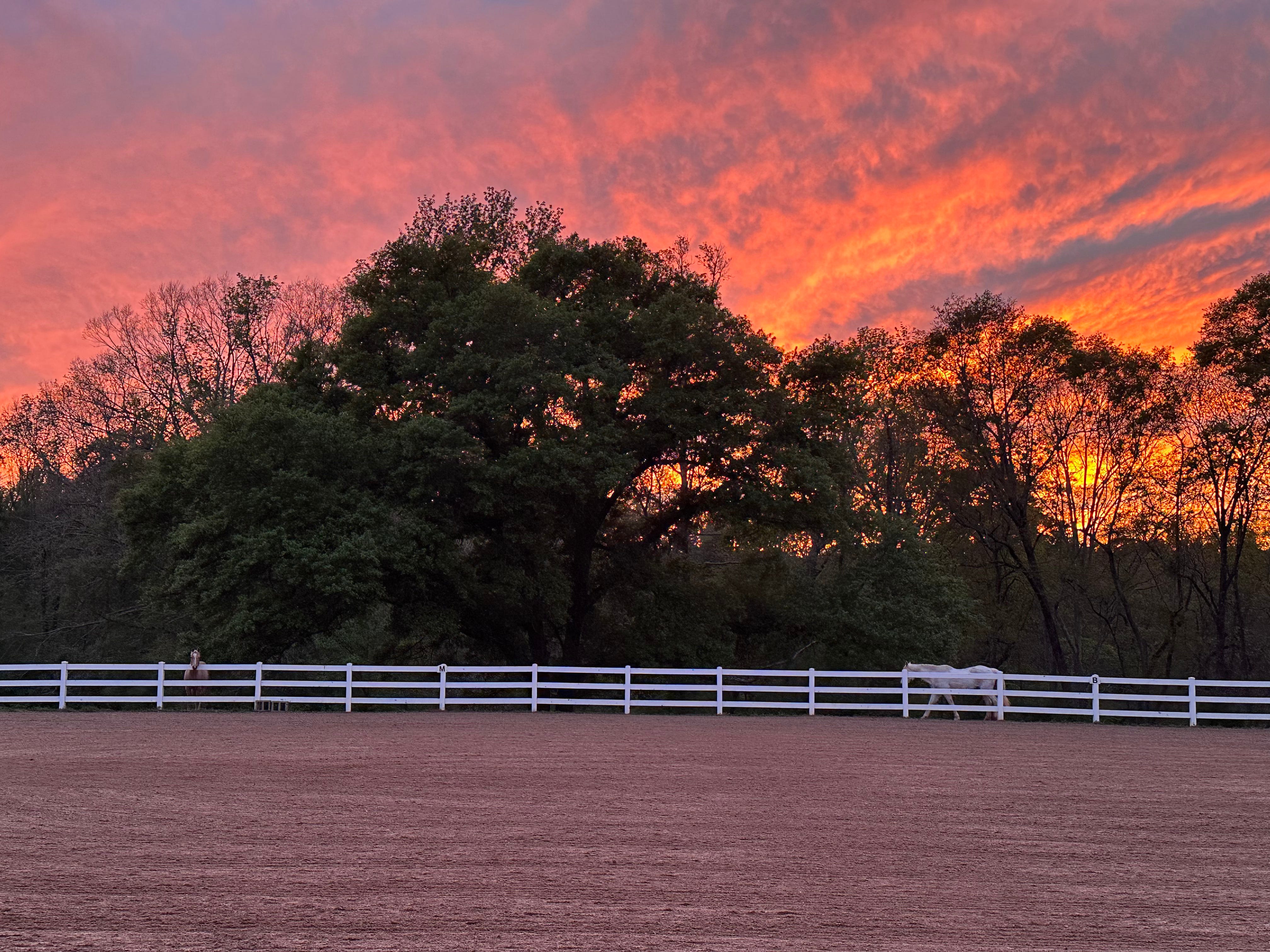
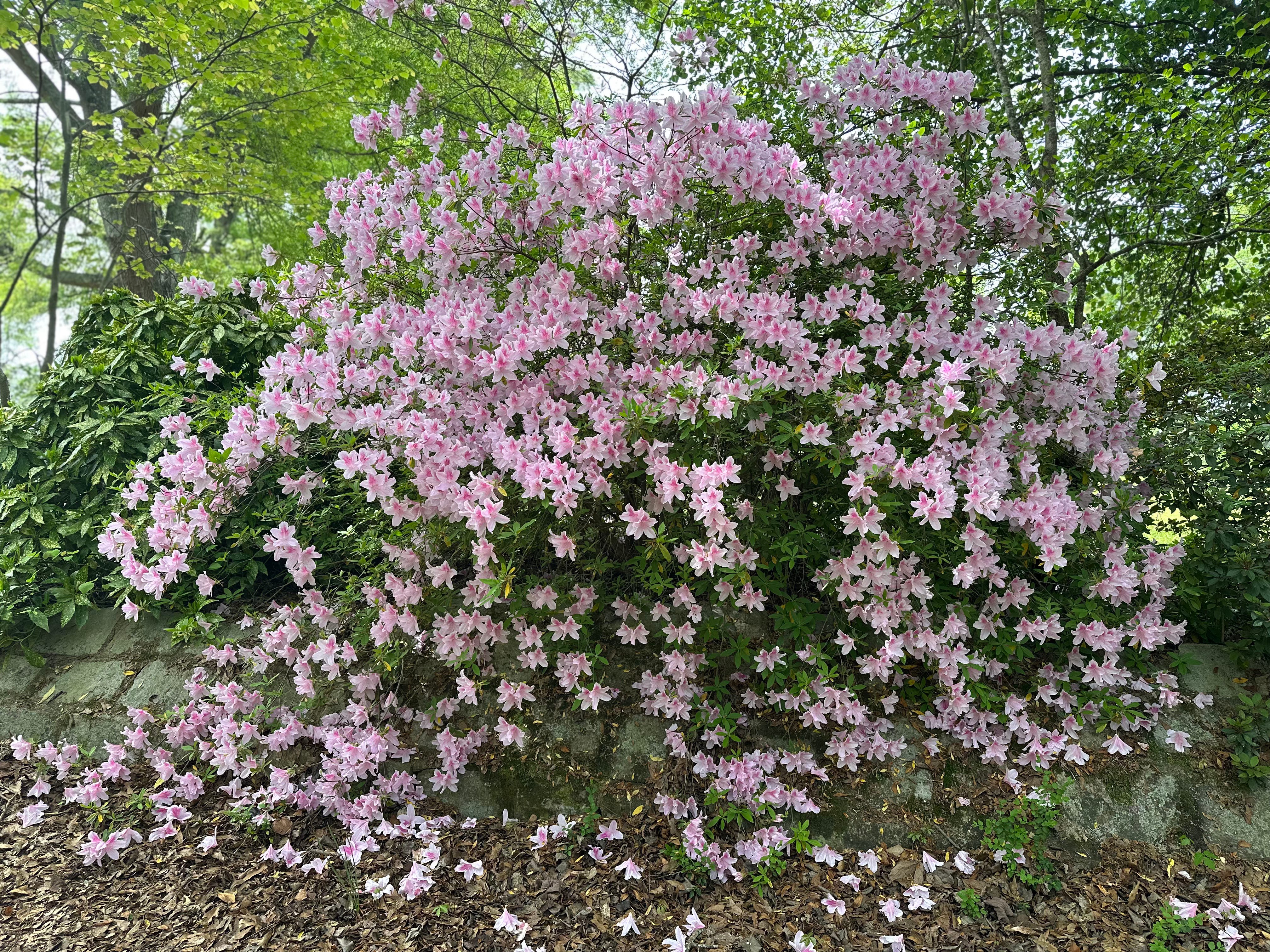
What had changed was that the trees’ leaves had sprouted. That was all. Over the course of a week, the trees leafed out, and the visitors were spying Lavender Hill through a green, shifting filter. The farm glowed in a soft, living light that changed the sound of the landscape. Two weeks ago, the trees were bare, and the breezes moved through them with a dry skeletal rattle. Now there are leaves, which means there are muted wind chimes everywhere, thousands of them, the whole canopy an instrument played by the air.
I walked in the fields as the landscape bloomed. I rarely leave the farm, so noticing change is like trying to catch the light shifting with the sunset — I blink, and the angle is different. As spring approached, I noticed a shift in how the ground felt beneath me, a sense deep within my body.
It was a gentle nudge, a boop, telling me to pay attention.
Attention brings recognition. The land helps me remember my way back to the signs I’ve drowned out with busy work and living. The information, like the signals from the horses’ hooves, is filled with orientation.
Two weeks ago, the wind moved through the bare branches with a dry, rattling sound — percussive, a little lonely, all skeleton and no body. Now there are leaves, and leaves change everything about how sound moves, because leaves are not passive, they participate, and what you get is less rattle and more a conversation, thousands of small voices all catching the same breath at slightly different moments, the whole canopy an instrument that didn’t exist last month and will sound like this for only a few weeks before summer thickens it into something else entirely.
The earth has been transmitting information for longer than we have been here, and Lavender Hill is no exception. The land is talking, and when you visit this place, and you slow down, you are given the opportunity to begin receiving again. It’s a frequency you were born knowing. It’s the thing the human in the barn aisle is trying to find when they stand frozen with their hand against the horse’s neck, waiting for an answer to fall from the sky.
The answer was never in the sky.
It was always in, and on, and through the ground.
But when our held breath never releases, and our sigh starts in our chest and gets swallowed because someone is watching, when a cry shuts down because we don’t have time to feel, our body’s natural transmissions get interrupted. The pathway doesn’t disappear; it just gets harder to find.
The wolves don’t do this. When a wolf needs to locate the pack, it howls. The elephant doesn’t schedule its grief for a more convenient moment. The whale doesn’t decide a song is self-indulgent and swallow it back down. Every signal that needs to be sent gets sent, and the earth or the ocean or the forest receives it, and something that needs to move moves.
We are the only ones who stop ourselves mid-transmission and then spend years wondering why we feel like something is unfinished.
Something is unfinished. The prayer wasn’t completed. The frequency didn’t find the ground.
Let’s change this.
YOUR BODY ALREADY KNOWS
Humans have Pacinian corpuscles, too. The same receptors that let a barefoot horse read the ground, allowing them to sense a flooding river before the water appears, and feel the tremor of an approaching herd long before they arrive, exist in the soles of our feet, in our fingertips, in our palms.
We are, at the level of our biology, built for the same conversation the animals are having. We just stopped listening.
A practice of barefoot walking on natural terrain shows a measurable increase in sensitivity to ground vibration compared to people who spend their lives in cushioned shoes on paved surfaces. The pathway is still there. It just needs to be walked again.
Animals don’t wait until they feel ready. The whale doesn’t clear its throat before it sings. The wolf doesn’t check whether the howl is convenient. The elephant doesn’t postpone its grief until there’s more time. They transmit because their bodies tell them to. The environment receives the sound, and life continues in the direction of the signal.
We humans, grew up in systems that rewarded stifling. We learned to override our hunches and to apologize for random tears. We’ve gotten very good at holding it all in our jaws, keeping the frequency contained, keeping the transmission private, keeping ourselves legible and functional and simple.
Energy in a closed system doesn’t disappear. It just waits, or routes itself somewhere else, or turns up as a tension headache or a 3AM, a pervasive sense that something is unfinished that you can’t track back to any source because the source was so long ago forgotten.
The good news — and there is genuinely good news here — is that the channel never closes. I have watched people in their sixties stand beside a horse for the first time and feel something unlock in their chest that they had stopped believing was still there. I have watched a person who came to Lavender Hill, wound tight as a watch spring, walk back to their car two hours later, moving differently. The ground received them. The horse beside them exhaled, reset, and showed them how it was done.
Something in their bodies remembered. Something in my body remembers every single day. This waking up is slow work, but it’s worth it.
This remembering is available to you right now, today, on whatever ground you’re standing on. The whales are singing. The wolves are locating each other across the distance. The trees at Lavender Hill are full of wind and new leaves and thousands of tiny instruments all playing at once. The earth is doing what it has always done, which is to transmit, constantly, in every direction, to anyone whose feet are on it.
You don’t have to go anywhere special. You just have to stop interrupting the reception.
The channel never closes.
The earth is still transmitting.
Are we willing to receive?
There’s a human standing in front of the barn waiting for certainty of the right direction before risking a move. I’ve given them a list of options. This person already knows which direction they would like to take. They knew their answer the moment I offered the list. They felt the signal surface. They recognized their hunch, and they talked themselves out of it three times before the situation became uncomfortable enough to force an answer.
My job is to stand with them in their discomfort until they find their way back to their knowing. I’m here for as long as it takes.
That’s also the work I’m doing for myself as I walk around in the fields, or when I sit beside the pond and watch the wind move across the water. It’s the work I’m doing when I press my hand against a horse’s neck and force myself to be unshakably present, allowing the frequency to travel both ways.
The earth recognizes us. It has always recognized us.
We are made of it, we are from it, and the earth calls back to its own.
RETURNING TO THE ALTAR
I’m not going to leave you with a protocol or a list. That would miss the point entirely, and your body would laugh at it — and have every right to do so.
What I want to offer instead is simple. I want you to consider that the last time you slowed down to stare at some water or listen to a song in your car, you were engaged in the deepest work. Allow yourself to believe for a moment that it was a signal coming through, and that it was a frequency heard in the deep, old, unmanaged part of you. And that part knows exactly what to make of it.
Your place recognizes you. You are a body made of the same matter as the ground, tuned to frequencies you were born knowing and have spent years learning to talk yourself out of. When it rises up through your feet on a walk in early April, when the wind moves through new leaves, and your body slows before your mind does, when you stand somewhere and feel something in your chest shift before you understand why — that is the frequency. You are receiving it.
The question is: will you trust it enough to believe it is real?
FIND YOUR FREQUENCY · THIS WEEK’S AUDIT + PRACTICE
When did your body last try to tell you something? Something you ignored and tried to talk yourself out of? Think about the tiny signals: your breath, a pause, a swallowed hum that started in your throat. Maybe you had the impulse to take off your shoes or to put your hands in the dirt. Search your mind for all the things you felt an urge to do but filed it under maybe later.
Those hunches are all incomplete transmissions. Let’s close the loop.
Pick one from the following list and give yourself five minutes this week:
Take your shoes off and stand on the ground. This can be grass, dirt, gravel —whatever you can get to. Just stand there and let your feet do what they were built to do. Notice what you sense and feel.
Find moving water and feast your eyes on it. This can be a river, a pond, a fountain, or a creek. I have a rock in my bathroom sink. Each morning, I watch the water flow over it. As you watch the water, let your breath follow the flow’s rhythm rather than obsessing over the patterns of your day.
Put your hand on something alive. This can be a horse, a dog, a tree, or a patch of warm ground. Press your palm flat and sense what is beneath it. The frequency is already waiting for you to find it. You’re not generating the energy, you’re joining it.
Let your sigh finish. The next time you feel a sigh starting — and you will, probably before the day is out — don’t pull it back. Let it move all the way through you. The horse does this every single day and comes out the other side more present than before. You will too.
The wolves don’t explain their howl. The elephants don’t wait for a better time to grieve. The whale doesn’t wonder if their song is worth sending. They just transmit their song, and the earth, which has been listening all along, answers back.
You’re part of this conversation. You always have been. You just forgot for a little while that you were allowed to speak.
Now you know again.
Go find something to listen to.
Love,
Kim