
The Dreaming
Notes from the second half

In this dream, I’m showing someone around an old house with many rooms. It’s my house, but I don’t know it well. I take the visitor down a passageway hidden behind a screen in the main hall, and we find room after room, spaces that are both familiar and strange, like places I’ve been before but forgotten.
The next night, I dream of another house. This one is bigger, sprawling like The Biltmore. I move through it having conversations with people I’ve never met but feel like I know. I try to call the farm to let them know I won’t be in, but my phone won’t connect. It never connects in these dreams. Later, the rivers around the house begin to rise. The flood doesn’t rush in to destroy, but it laps like a warning around the foundation.
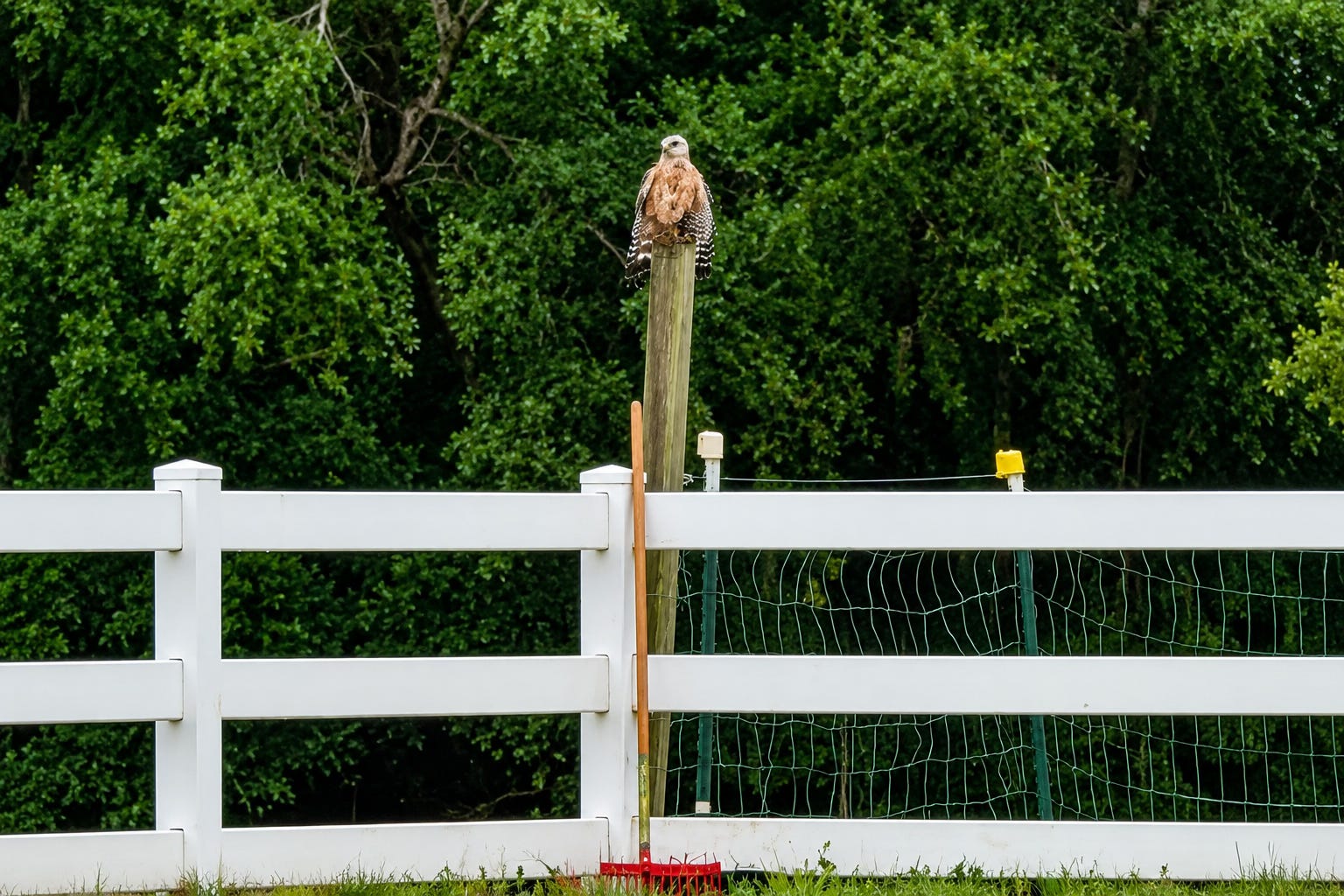
This weekend, in waking life, a hawk landed on the fence post beside the arena in the pouring rain. He watched me and held still, occasionally hanging his wings to fluff and dry. He was patient, and he gave me the same feeling as the dreams. A reminder to put my phone down and pay attention to what’s in front of me.
It felt as though the hawk travels both worlds, waking life and the dreaming, a messenger carrying an alchemical truth that waits in every room I travel in my dreams, in every symbol, pointing me closer to the answer.
The gold isn’t buried somewhere out there, marked with an X.
It lives inside me, too close to see in waking life.
The nature of my dreams has changed since moving to Lavender Hill. The shift was immediate, a sudden lurch in the transmission of my mind, as if I’d jumped timelines or switched frequencies. The imagery is different. It’s heavier, and more exact, the atmosphere drenched in a feeling I’ve never experienced before sleeping in this place, a thick, amniotic gravity.
I lie perfectly still in the early dark with the remnants of some vast scene dissolving at the peripheral edges of my mind. I hold my breath and try to grip the center of the image before it evaporates entirely into the walls and shadows of the bedroom.
A staircase descends into black, still water. A heavy oak door opens into a room I never knew was there. A figure stands at the far end of an overgrown field and looks back at me with a familiarity that frightens me — a figure who may or may not be me.
I’ve always been a reluctant sleeper, a night owl who believed that going to bed would make me miss out on something, even if there was nothing tangible I might miss. My father always said I would grow out of it. I have not — or I hadn’t, until now. Since moving to Lavender Hill, I sleep straight through the night. A nurse recently asked me if I was a heavy sleeper, and I answered that I absolutely was, but it was a recent affliction.
I now have long, unbroken, unhurried sleep, the kind my body has always secretly craved for restoration even when my mind fought it. I don’t lie awake staring at the ceiling anymore. I go down, and I stay down. If I do wake briefly before dawn and drift back under, the dreams that follow are the richest of all — dense with symbols and atmosphere, and easier to recall and hold onto in the half-light. I don’t know what to make of it except that something in this place has, finally, convinced my nervous system to let go.
Maybe much of it has to do with where I am in life, the chronological reality of my age. I’m no longer approaching fifty — I’ve crossed the line and entered my fifties, actively living them. I am walking around in that decade now, running my fingers along the walls, and noticing where the furniture is arranged and where the floorboards creak.
Everywhere I click and turn, I’m recently reminded of how human life expectancy crossed a threshold past Industrialism, from our 30s to our 70s and beyond. Our psyche marks the passage of time in a way that is independent of whatever poised, mid-life composure we’ve managed to construct on the surface. The psyche waits. It waits until our conscious guard drops, and the house goes quiet. Then it slips into the basement of our minds and does its real work.
Or it has nothing to do with my age, and this dreaming has more to do with the frantic change and quiet upheaval of the past two years of my life. If I were a plant, the move to the new farm felt like uprooting rather than transplanting. There are losses that left permanent hollows in my week and sudden, uninvited appraisals. There were things I actively chose and the things that were chosen for me without my consent, handed to me like an invoice for services I didn’t know I had contracted.
Any one of these things would be enough to dislodge something from the foundation of my sleeping mind. Each one of them might have been enough to stir something loose from the foundation. But together, they feel like a total renovation — a violent, dusty dismantling to the studs.
I’m finally discovering what the house looks like beneath the paint.
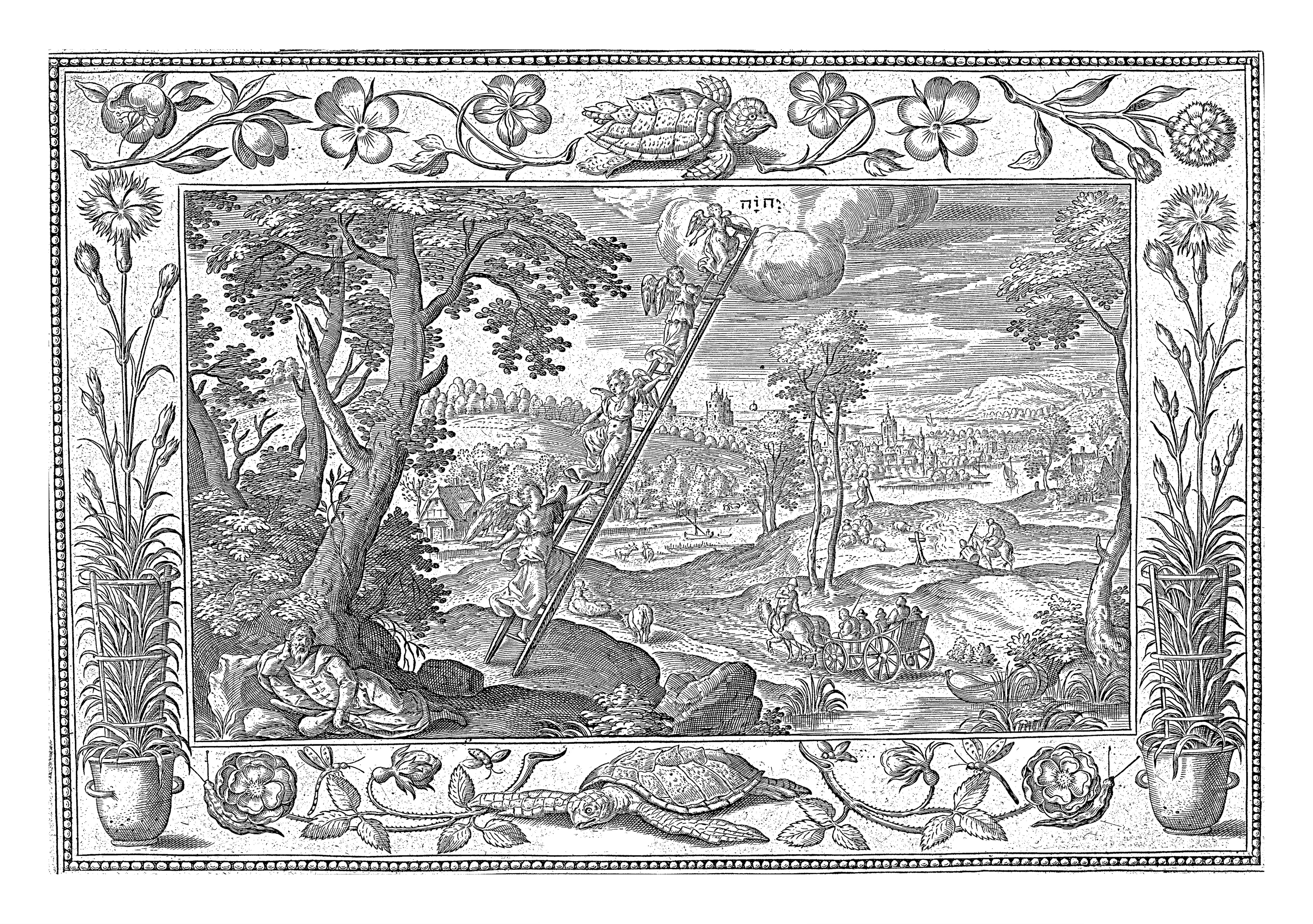
PLEASE NOTE: Before I go any further into the Western dreaming tradition, long before our sleeping had a clinical name or a definition, cultures around the world understood dreaming to be a serious matter. I am not equipped to speak for those traditions with any authority, and I won’t try. But I notice that every civilization which predates the European Enlightenment has treated dreaming as information — as a source of guidance, warning, and contact with what lies beyond ordinary waking consciousness. It is our modern Western habit to dismiss dreams as mere neural noise, devoid of meaning. The long view of human experience is unanimous on this point: what happens when we sleep is worth paying attention to. Emphasis on dreams is not new knowledge. We’ve forgotten what those who came well before us already knew.
My cousin Janette is a wild botanist. She’s always belonged in a manuscript, written with symbols on the edges of the page. She knew the names of plants by walking near them in the fields. She was born knowing how to identify and use things that grow on the edges.
She is older than me, and I spend most of my after-school time with her. We’d sit in terraced fields and watch the clouds move. As we did this one day, she told me that she no longer daydreamed. This knowledge terrified me. Daydreaming was my primary survival method for most of my childhood, an interior room I retreated to when the exterior one was too unstable.
The idea of losing access to it felt like losing my one way out.
I didn’t understand how she could say this fact so matter-of-factly, but I do now.
At some point in the middle passage of life, daydreams slip away in the overnight bag at the bottom of our closets. It’s the bag that the cats rub up against, leaving their hair adhered to the bright cotton. Daydreams go to rest, and we are left bereft in the rooms we were always trying to leave.
I get it now. Like my cousin, I grew up, and my daydreams slipped away.
But in the new farm, I’ve begun to experience a swooping, falling sensation in waking hours, a momentary dissolving of the boundary between here and somewhere else. I thought, at first, it was my blood sugar dropping. It scared me. A lot of women call it brain fog, apologize for it, and try to push through.
But when I stopped fighting it, when I let my anchor drop into the feeling instead of yanking it back up — I arrive at the edge of an experience that feels exactly like a dream. The waking dreams are coming back. These aren’t the escapist dreams of my childhood — they’re not a way out. They’re a way into an experience that feels ancient, like being led by something that knows the road better than me.
During REM sleep, the stage where most of our vivid dreaming occurs, our brains’ emotional centers function at full intensity while the prefrontal cortex, the seat of logic and rational self-editing, goes comparatively quiet. This is why dreams feel emotionally overwhelming and structurally strange. The part of you that would normally chalk something up as nonsense has clocked out for the night.
Major life transitions, such as moving, loss, and upheaval, are known to intensify dreaming because our REM cycle is flooded with unprocessed material. Sleep is where our bodies do their sorting and processing — and that’s why sleep is so essential to our well-being.
A typical night consists of four to six sleep cycles, each roughly 90 minutes long. The early cycles are dominated by deep, restorative sleep, repairing your body. REM arrives later in your sleep, and it grows longer with each cycle. By the time you’re nearing waking hours, REM is doing its hardest work.
The most symbolic, emotionally saturated, atmospheric dreaming happens only if you stay asleep long enough to find it. For most of my adult life, I wasn’t staying down long enough. I surfaced too soon. When I do wake briefly now, before dawn, and fall back under — I re-enter that late REM almost immediately, which is why those morning dreams are the richest. It’s the map to the deepest room in my internal house.
Lavender Hill Farm woke this up in me. It could simply be a matter of timing or the energy that we’re living in right now, but once I moved here, I discovered that my night dreams were of consequence. I used to laugh at dream journals. Now I’m typing frantically on my phone when I wake, trying not to miss a thing.
I understand the science of sleeping, but I’m obsessed with the place where science and spirit connect. It’s harder to explain what the old woman offering me something from her cupped hand is trying to tell me, or why the locked room at the back of the sprawling house, the one I can’t find a key for yet, feels like an invitation for me to look harder.
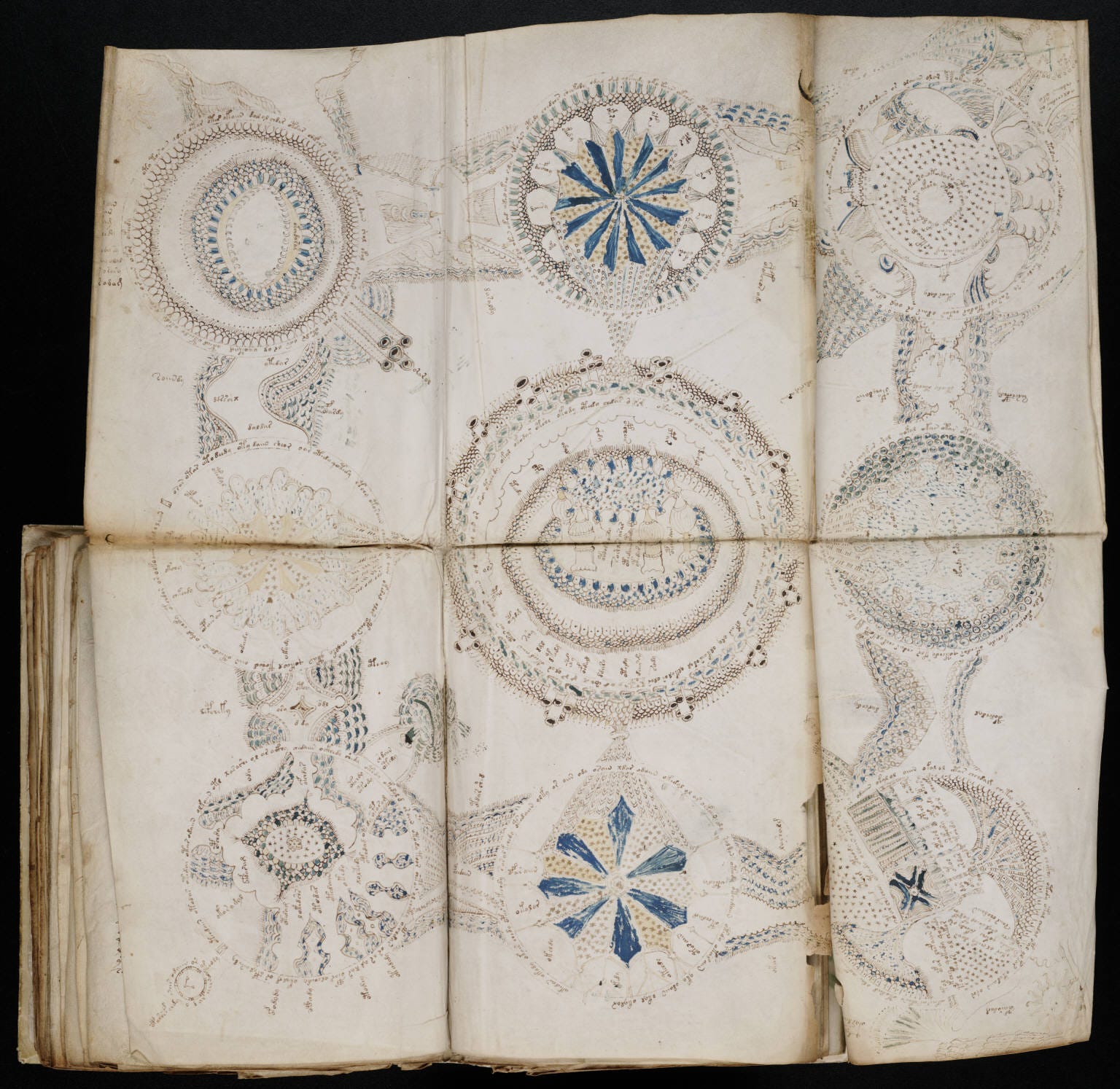
Consider the Voynich Manuscript.
In the 1400s, an unknown person produced a meticulous, beautifully illustrated codex in an unknown script that medieval scholars, World War II codebreakers, modern cryptographers, and artificial intelligence haven’t been able to decipher in 600 years. The most widely accepted fringe theory is that it represents a defunct Turkic dialect.
The author of the manuscript is unknown, but we can trace its provenance to Holy Roman Emperor Rudolf II, who paid the equivalent of $90,000 to add it to his library. The manuscript passed through a succession of alchemists and collectors before vanishing. It resurfaced in 1912, when a Polish rare-book dealer, Wilfred Voynich, acquired it. After his death, the book was placed in the care of Yale University, where it remains in the public domain to this day.
Most of the manuscript’s pages are filled with careful botanical drawings. The plants are rendered with detail and intention, but they represent plants that have never been documented outside the book’s pages. They don’t exist. Some plants appear to be composites with a root from one species, a flower from another, and a leaf from a third. Some scholars suggest that the plants might have stemmed from some dreamlike hybrid world the artist alone could see.
What we do know is that someone with quill and ink sat down in the fifteenth century and drew, with extraordinary precision and evident purpose, the contents of an inner world that has no basis in any scenery or language that anyone remembers. It is commonly thought that the text might be a cipher, a secret code that, so far, computers and humans have been unable to break.
Whoever made this book believed the inner world was worth their time and ink. They believed the record itself had value, even without a guaranteed reader or a key. Six hundred years later, we still can’t read it, but we recognize the instinct within ourselves.
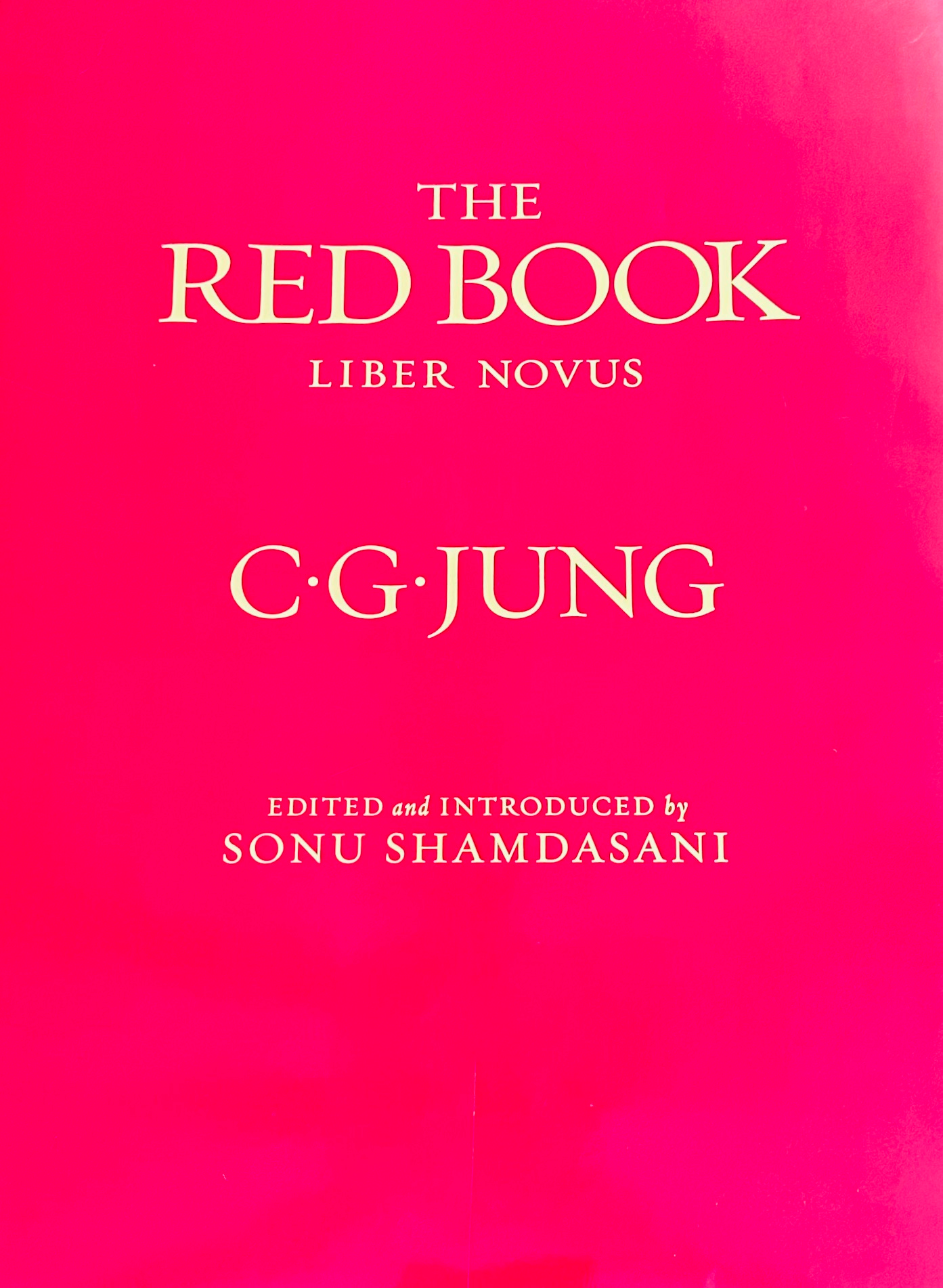
Carl Jung drew something very much like the Voynich manuscript himself. He enclosed it in a large red leather-bound volume that wasn’t shared with the public until fifty years after Jung’s death.
The Red Book, when it finally appeared in 2009, took the world’s breath away.
Thankfully, Jung provided us with the key to decipher his code.
Carl Jung also dreamed of houses. He entered the house in his sleep, and there he found two levels, many rooms, and a descent through the structure that carried him away from his personal experience and into a world that was ancient and shared.
He woke from his dream, convinced he had been shown the architecture of the human psyche itself. The ground floor was the first level of the unconscious, and the basement beneath that floor was our primal, instinctive, collective. Each room in the house represented a different period in human history, and each level displayed a different layer of the self.
The French philosopher Gaston Bachelard, working independently of Jung and from a completely different tradition, arrived at the same building through a different door. “Our soul is an abode,” he wrote, “And by remembering houses and rooms, we learn to abide within ourselves.”
He called the cellar of his house the seat of fear and primal instinct. The attic was an aspiration that had been ignored. The roof represented the self that meets the public. Both Jung and Bachelard dreamed of houses, and I have been dreaming of my house since I arrived at Lavender Hill.
Apparently, I am not the first.
Jung believed that our unconscious communicates through images.
When we dream, we see water and fire, shadow and stone, animals with human eyes, and our dead return, standing casually at our kitchen counter, saying things we might not be able to understand beyond feeling. The dream, for Jung, was not a malfunction in our minds or a curiosity. He believed dreaming is the primary medium through which our deeper self attempts to make contact with our conscious mind, a nightly dispatch from the part of us that knows.
Jung also believed that the second half of our lives demanded a fundamentally different kind of attention than we give the first. Our ambitions and our exhausting performances of early adulthood give way to deeper knowledge — if we let it. He called that discovery individuation, the slow, agonizingly beautiful project of becoming more fully yourself.
The first half of life, he observed, is about building the ego that we use to construct armor, secure our boundaries, and establish ourselves as something legible to the world. But the second half of life is about learning what that carefully constructed ego is protecting us from.
What am I afraid of? What do I think will happen if I let my walls down? Most importantly, what is that protection costing me now, in interest?
Jung experienced these questions himself — thankfully, he documented his journey so the rest of us can realize we’re not alone. When he was thirty-eight, Jung’s professional and intellectual life collapsed. He’d deviated professionally from Sigmund Freud, and the rupture left him without a mentor or an intellectual community. Suddenly, his identity and everything that he’d worked hard to achieve during his life were gone.
What happened next is what Jung would call his confrontation with the unconscious.
He was besieged by vivid, relentless visions. He heard inner voices. He engaged deliberately with imagery and figures emerging from his own psyche in ways that he later admitted, in his own writing, he feared might be the beginning of madness. He recorded all of it in careful, ornate handwriting and illustrated it with extraordinary paintings in a large red leather-bound manuscript that he kept locked in a bank vault.
The Red Book, as it came to be known, was not published in his lifetime. It sat in that vault, mostly unseen, for nearly fifty years after his death, until it finally appeared in 2009. The reason for the delay is that Jung’s descendants felt the book would damage his reputation.
The Red Book contains everything Jung would later theorize about individuation, our shadow, and the symbolic language of the unconscious. The thoughts materialized in the dark night of his soul. Creating the book was an act of survival for him. He needed to discover what this house he had dreamed of was made of.
The basement floor holds particular interest to Jung. It contains our shadow, which is everything our ego armor edits out of us so that we can become functional, presentable, employable, and loved. Our shadow consists of all our desires that seem too disruptive. It holds our grief, which has nowhere else to go, and our anger, which hasn’t been allowed expression. All the undesirable traits have to land somewhere, and our shadow holds them, accumulating throughout our lives and growing darker, denser, and more compressed the longer they go without being acknowledged.
“Everyone carries a shadow,” Jung writes, “and the less it is embodied in the individual’s conscious life, the blacker and denser it is.”
Our shadow also contains the answer.
Jung states: “The shadow is ninety percent pure gold.”
The answer to mining the riches that we can find in our shadow is easy to skip over because it requires a lot of focused attention. Jung called the act of finding that information active imagination, the practice of entering the imagery of our dreams when we’re conscious, and allowing the symbols and figures we’ve met there to speak. We have a conversation with our dream.
Instead of standing outside our dreams and trying to translate them like a foreign document, we go back in. I ask the old woman with the cupped hands what she is holding. I try the locked door again, whether I’ve found the key or not, because my unconscious self recognizes and responds to my attention.
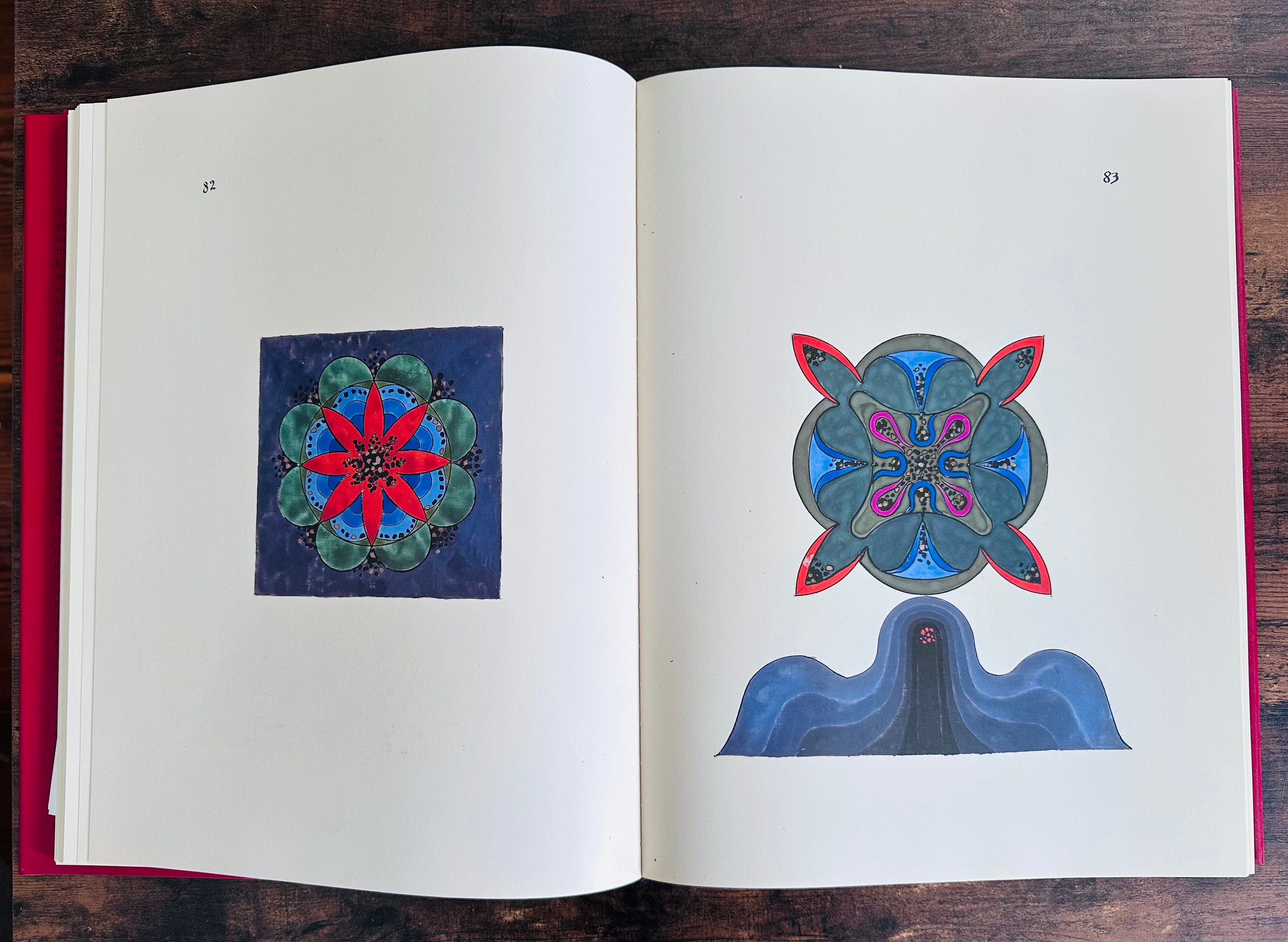
There are many spots at Lavender Hill Farm that feel like they were constructed in a dream world. The name we inherited from the previous owner carries a quality that is soft and strange, botanical and elevated, as if it exists off the main road of ordinary reality. There are mornings when the light comes through the high windows at an angle that makes everything look like a memory. Ordinary things become otherworldly.
The hawk on the arena fence post watches me with focused patience, waiting for me to catch up.
I pay attention in a way I couldn’t afford to before. My fifties give me a fraction of that hawk’s patience, a willingness to be present here, to occupy the moment that I’ve found in this bewildering and flawed and terrifyingly beautiful life.
The dreaming isn’t direct or exact. The coded messages don’t have actionable instructions and a legible plan. They move through me like a storm in this southern drought, their winds working through my system, leaving my landscape subtly, or visibly, changed.
The most I can do is stay asleep long enough to reach the dreams and try to live a waking life that is worthy of whatever the night is trying to show me.
Jung understood that we go through phases in which we unlock our own ciphers. He went down into the basement and met the outcast parts of himself. The images he drew held discoveries that went beyond language.
We do that too, when we dream.
Inside of us are maps that cannot be understood by the version of us still trying to outrun our journey. I’m learning that in the second half of my life, I’m more willing to recognize my own reflection.
This morning, the light stretches across the kitchen floor at Lavender Hill, catching the old wood grain and the coffee cup I forgot to move last night. I’m no longer standing outside my own life trying to earn my way back inside. I thank the dreaming for that.
And as I wake up each morning and catch the fleeting images of the worlds I visited in the night, that is enough.
Love,
Kim
This was so beautiful and honest.
I feel just as passionate about dreaming and the inner world as you! There is so much wisdom at our fingertips if we pay attention and then it folds into the waking and back into the dreaming.