
A Beginner’s Guide to Shadow Work
Understanding the hidden patterns shaping your choices, relationships, and reactions

Standing in the aisle of the orderly, swept barn, I was amazed at how quickly I had settled into a new routine in this historic farm that is still brand new to me. As I stared at the stall windows and smooth floors, a cup of tea cooled in my hands. Beyond the big, sliding doors on either side of the barn, fog rose from ponds, and the horses drifted like specters through the haze.
I had woken up as one version of myself — I was efficient, certain, and bold, and I resolved to handle the day strictly like a compliance manager, but the moment I stepped outside, another self slipped in from the mood in the fields. Underneath my lists and drive to make things happen was the exhausted part of me, bracing for a coming storm even with the forecast of a mild day.
So much of this year has made me remember that my orientation begins and ends on the ground. Tending a farm makes grounding a literal reality rather than a hazy concept. But inside me, there is a whole crowd of personalities moving through the world, shifting and surfacing as the day unfolds. We pretend we’re singular, but we’re not. We are a constellation of selves learning how to keep us alive.
And each one believes it’s doing the right thing.

The Selves That Grow in the Dark
Most of my earliest selves weren’t born in happy times. They arrived when life felt sharp and dangerous — when the door slammed, when adults whispered in kitchens, when I watched my mother walk away from her home up a snowy street — when I disappeared into fantasies to escape the life I lived.
Inside of me there are many selves:
There’s the caretaker who manages everything before anyone needs it.
The fighter who steels herself when she senses a shift.
The dreamer who believes another beginning is always possible.
The one who wants to vanish the moment the world becomes too loud.
The one who watches everything but says nothing.
Underneath all that is the one who watches everything but says nothing — our core self watches all of this play out. Eckhart Tolle calls this your “inner self” or your “inner witness.”
Be the silent watcher of your thoughts and behavior. You are beneath the thinker. You are the stillness beneath the mental noise.
The horses have their own versions of sub-selves. Max has a teacher self, a trickster self, and a self that I find when I visit with him in the pasture. I’ve learned more about my own inner cast of characters from watching the horses than from any book or training. Their shifts are honest — ours often aren’t. Horses own the state that they’re in and don’t try to fight it, ignore it, or cover it up.
NOTE: The shifting selves I’m talking about here are a normal part of being human. They’re nothing like Dissociative Identity Disorder, which involves actual fragmentation and memory gaps. That diagnosis, formerly called Multiple Personality Disorder, is a break in perception. What I’m exploring this week is something far more common: the everyday selves we sculpt to move through the world — the versions of ourselves we’ve created like art to survive, adapt, and belong.
When Old Selves Don’t Know Whether to Follow or Lead
There is the part of me who knows how to endure and another who’s weary of living in a posture of bracing. The move to the new farm stirred up older versions of me that rely on urgency and hyper-vigilance. These are my parts that can read the weather before it changes, who sleep lightly and never fully unclench. They’ve kept me alive more times than I can count, but they don’t believe good things are supposed to happen.
Their job has never been about hope. Their job is survival.
I have another part that moves to the surface when the dust has settled. I don’t always recognize this self because she isn’t powered by adrenaline. She is quieter, but not fragile, grounded, but not immovable. She’s the self who lets the cold morning air fill her lungs instead of rushing through the ache of it. This self doesn’t treat chores like a race but sinks into them like a rhythm. She listens to the land’s subtle conversations instead of trying to outrun her thoughts.
I’ve felt both of these selves acutely lately, vying for space: the crisis-trained part pacing toward the future as if being still would ruin everything, and the emerging sense of quiet that asks me to stand still long enough to feel the ground under my feet. It’s like watching water eroding soil as my two dominant selves meet: the old pattern carving away with its familiar force, and the new one rooting down in stubborn defiance. Neither self is wrong. Neither self is disposable.
I’m just two (plus more) selves trying to protect the same heart in very different ways.
Naming is my first language of clarity
When I’m working with someone in the barn, in the office, in the field or on a Zoom call with a cup of tea between us, I lead them through a series of questions to help them remember two very particular moments: one where the world felt like it was too much, and one where they felt deeply rooted and capable in their own skin.
We name the self who rises during hard moments.
We name the one who softens during easier times.
I love watching the shift that occurs when we realize that we lead with different faces. Naming is a deep and holy power. And by naming, we shift our focus from being the one experiencing to being the one witnessing. We gain some distance and perspective. The naming doesn’t have to be hard or fancy — though people often struggle to find the right one. It just has to be a moniker we use to pass the gap between who we are and what we do.
For example, the me who shuts down becomes Overwhelmed. The me who gets things done becomes Architect. A me who feels capable becomes Brightness. The naming is specific to the person doing the naming and can be anything at all that feels right to them. Naming shifts us from the narrative structure of our brain into the symbolic, the metaphorical, the nebulous space of creativity and curiosity.
Once these selves have names, they stop being vague sensations and start being recognizable companions. Our selves gain borders, they gain dignity. The selves become easier to stomach without judgment — because you’re no longer wrestling a blur. You’re listening to someone who has been trying to speak for years.
That’s the heart of my coaching practice: letting our selves speak their truth in a safe place where it doesn’t feel like we have to move blindly into action.
Shadow Work as the Deeper Root
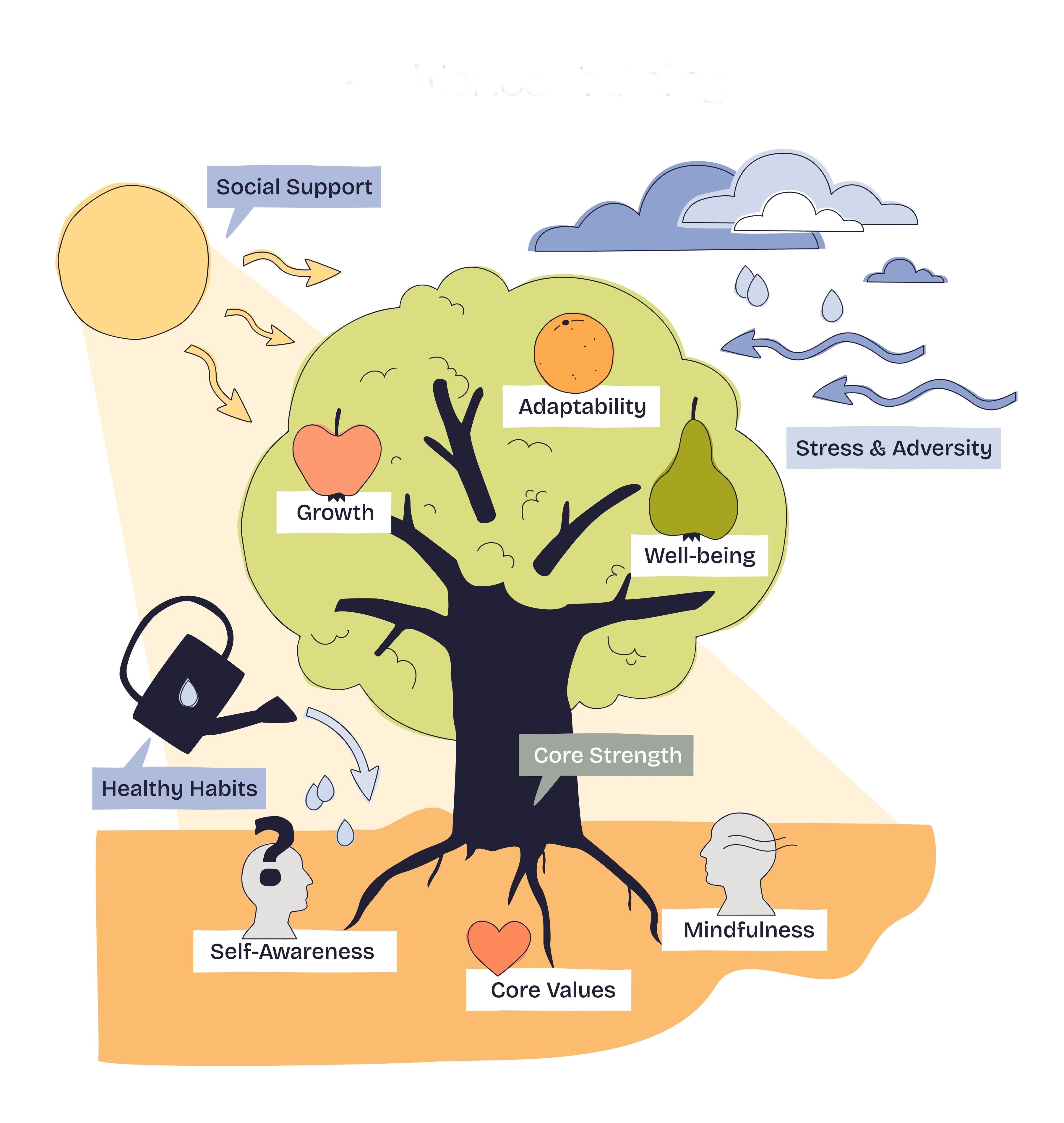
The use of the word “shadow” to define the mostly hidden aspects of our psyches was dredged to the surface by Carl Jung. Getting to know and name our hidden pieces, to become aware of internal influences driving our actions, is the first doorway into getting to know our deeper shadow self.
Here’s a section from Christopher Perry’s great article describing Jung’s shadow concept:
Complementary to Jung’s idea of the persona, which is “what oneself as well as others thinks one is” [CW9 para 221], the “shadow is that hidden, repressed, for the most part inferior and guilt-laden personality whose ultimate ramifications reach back into the realm of our animal ancestors…If it has been believed hitherto that the human shadow was the source of evil, it can now be ascertained on closer investigation that the unconscious man, that is his shadow does not consist only of morally reprehensible tendencies, but also displays a number of good qualities, such as normal instincts, appropriate reactions, realistic insights, creative impulses etc “ [CW9 paras 422 & 423].
The shadow isn’t the enemy. The shadow is simply the truth we haven’t made space for yet.
Every time I ask someone to recognize their Operating Self — the self that shows up in fear or overwhelm — I’m inviting them into shadow territory. We don’t dwell there; we just notice and name it. We spend more time with our shadow selves than we realize as we go about life. Naming an aspect of our Empowered Self becomes the counterbalance — not an opposite, but a companion that reminds us we have actually experienced times of ease. And we have more power to consciously shift between our primary modes of functioning than we realize.
Naming our selves is the backbone of my coaching practice. When we turn toward the parts of us that are hidden, we begin to see where we are stuck.
When We Become Allergic to Our Own Shadow
Many of us are allergic to our own shadow. And by allergic, I don’t mean that as a symbol or a metaphor — I mean nervously, physically, somatically. We treat the hidden parts of ourselves as intruders, and our bodies raise an alarm to crush them down.
I’ve watched people’s whole bodies react when a disowned part of themselves steps into the light, and I’ve felt the shift happen inside myself. Our throats tighten. Our breath shortens. Our shoulders rise to protect us from a blow. We begin to apologize for our emotions before they surface, further stifling the information that needs to be taken into account.
The squashed feelings don’t go away — they take root and grow. Repression is like kudzu, proliferating on the surface until it chokes everything out.
An allergy is the body misreading something harmless as a threat. Emotionally, we do the same thing.
A tender need becomes weakness.
A boundary becomes selfishness.
Anger becomes dangerous.
Sadness becomes too much.
We mistake our feelings for hazards and respond by suppressing, fleeing, and polishing ourselves into palatable shapes. The irony is that the shadow only becomes stronger the more we resist it, just as an untreated allergy becomes more reactive. And like allergy shots, safe, tiny doses of the reactive substance build our body’s understanding and tolerance of the assumed threat.
Horses don’t do this.
A horse feels what it feels.
The horse allows the feeling, and by allowing, the feeling moves on.
Humans clog the system by resisting the parts of us we fear others will recognize and reject. We become allergic to the pieces of us that most need understanding.
Shadow work teaches us to stay present through the first spike of discomfort. We learn to breathe through our initial internal reactions instead of abandoning ourselves. Through that acceptance, transformation begins. The goal isn’t to purge our shadows, but to realize they were never toxic to begin with.
How Our Various Selves Shape the Way We See the World
Our sub-selves not only shape how we feel; they also inform how we interpret everyone around us. A moment of silence from another person can activate a self that assumes we’re about to be abandoned. A passing glance can summon a part that believes that our belonging is tied to our hard-earned worth.
Shadow work sharpens this awareness. It teaches us that our irrational reactions are usually rational for another version of us, a version that lived through something we’re internally bracing against happening again.

Integration Instead of Erasure
True healing doesn’t come about by ignoring the parts of ourselves we don’t like. It isn’t about becoming pure light or perfect composure.
Carl Jung said:
People will do anything, no matter how absurd, in order to avoid facing their own souls. One does not become enlightened by imagining figures of light, but by making the darkness conscious.
Integration is the messier and weirdly easier work. It’s not tidy.
The land at Lavender Hill knows this. The land in this new farm carries every century it has lived through — every storm, every repair, every story whispered through its roots.
Nothing has been erased — and the land where you’re standing right now carries its own history. You carry your own history.
I’m learning to treat my internal landscape the same way: my brave self, my frightened self, my shadowed corners, my bright edges. They all belong here. They don’t all get to drive my ship all the time, but none of them deserve exile.
The Self Leading Me Into Winter
As we move into the colder months, I’m actively cultivating rest while noticing which of my personas are emerging. The dust is settling on our big move to the new farm, and I’m agitated, short-tempered, and filled with an urgency that has nowhere to go. In years past, I would have acted on these hair-trigger impulses and regretted spreading my rage. But now I remind myself to be still and to notice what I’m feeling — to see what it’s trying to tell me.
I will never perfect the art of shadow work, but I’m so thankful for the time I’ve invested — and continue to invest — in getting to know the me that lies beneath my conscious thoughts. I’m quieter and more rooted, reminding myself how important it is to connect with the pulse of the ground. I want to listen to the land’s slow exhale, the mist rising from the ponds and the fields, as I remember to do the same.
I’m not afraid of my shadows. I understand that they’re a part of my story.
But I’m also not trying to become a single, perfected version of myself. I’m far more interested in knowing who inside me is speaking so I can choose what I want to lead with. The horses remind me daily that being present isn’t a fixed state — it’s a practice. Learning to notice is a living, changing act. It’s a conversation with our truest nature and the nature living all around us.
My invitation to you this week is:
Notice which self woke up with you this morning. Name it.
Meet the shadow announcing its presence whenever you feel frustration, or anger, or something you want to push away as it rises up. Name it.
Allow the truest, most integrated version of yourself to take a step forward. When you take responsibility for your own growth and knowledge, your actions reverberate in the community. Becoming aware of and attuned with yourself is the single most important act you can give to the people around you — and to the world.
Here are some journaling prompts to shine a beam in the darkness:
1. What part of me shows up when something feels hard or overwhelming?
Describe how this self feels in your body, what it tries to protect, and what it’s afraid might happen.2. What do I avoid feeling, saying, or admitting—even to myself?
Name the emotion or truth beneath the avoidance. Where did you learn it wasn’t safe?3. Who was I the last time I felt truly grounded and capable?
Write about that version of yourself. What did they know? What can they teach the self who struggles?
If you’re in the Greenville, SC area, please join me for my Rooted Gatherings, in-person at Lavender Hill, in December. And if you’re not able to attend these events live, I’m always here to arrange a private Zoom session.
Let’s reconnect with ourselves and the land beneath us together. I’m so glad that you’re here with me.
Love,
Kim